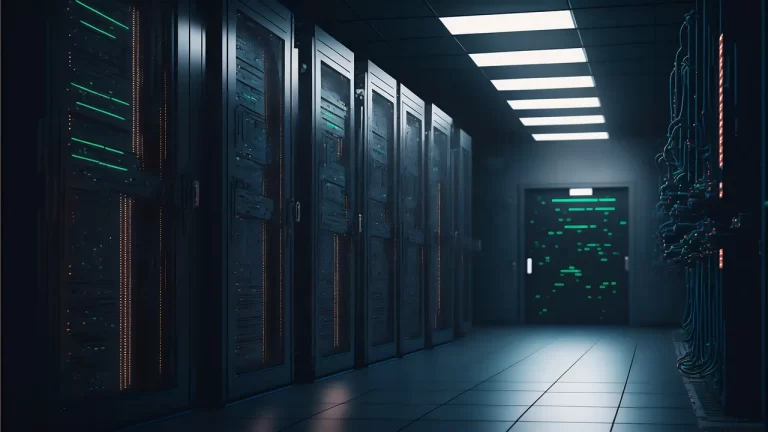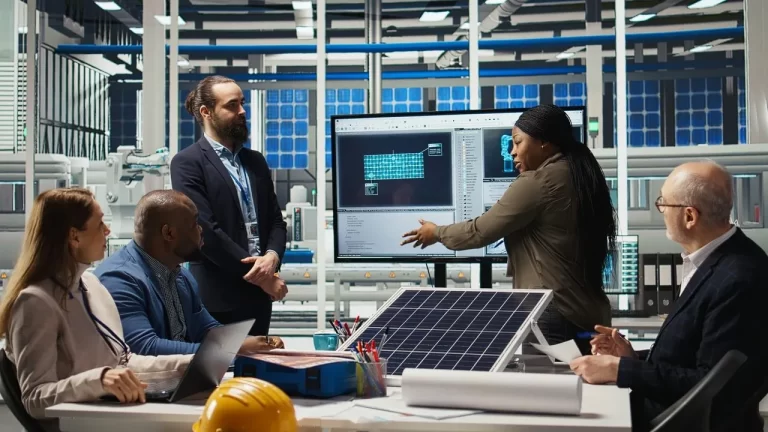
AI is revolutionizing the data center industry, driving unprecedented changes in infrastructure design and construction. As AI adoption accelerates across sectors, data centers face mounting pressure to evolve rapidly. This transformation presents both challenges and opportunities for construction teams tasked with building the next generation of AI-ready facilities.
The Growing Demand for AI-Ready Data Centers
The data center industry stands at the dawn of a transformative era, propelled by the relentless advancement of AI. Global data center construction has reached record levels, with all indicators suggesting AI demand will continue to build momentum in 2025. This surge is driven by billions of dollars invested in AI over recent years, fueling the need for more powerful and efficient data center infrastructure.
At the heart of this revolution lies the rapid progression of semiconductor technology. Tasks that once took 32 hours can now be completed in just one second using the latest GPU technology. This huge increase in processing speed enables AI programs to train on increasingly larger datasets, accelerating the pace of innovation with each new GPU generation.
High-Density Power Systems: Powering AI Workloads
The computational demands of AI algorithms necessitate a fundamental shift in power distribution and management within data centers. Traditional power systems are no longer sufficient to meet the energy requirements of AI workloads, which can reach up to 50 kW per rack in some configurations.
To address this challenge, the industry is moving towards three-phase power systems, which offer superior efficiency in meeting high-power demands. These systems not only support higher capacities but also use more manageable wiring, reducing installation costs and complexity. For a 15 kW rack, three-phase power utilizes smaller, more easily managed wires compared to single-phase alternatives.
Innovations in power module technology are also playing a crucial role. For instance, Infineon Technologies recently introduced high-density power modules specifically designed for AI and high-performance data center compute. These modules deliver industry-leading power density of 2.0 A/mm², optimized for vertical power delivery (VPD) to minimize resistive losses and enhance system performance.
Advanced Cooling Solutions: Taming the Heat of AI
As AI workloads generate substantial heat, efficient cooling solutions have become paramount for maintaining system stability and performance. Traditional air-cooled systems often struggle to adequately dissipate the high heat density produced by AI applications, leading data centers to explore more advanced cooling technologies.
Liquid cooling has emerged as a preferred solution for AI-centric operations, offering enhanced performance, increased energy efficiency, and improved reliability. Two primary methods of liquid cooling are gaining traction:
Immersion cooling: This involves submerging IT hardware directly into a dielectric fluid, providing efficient and direct cooling without relying on traditional air-cooled systems.
Direct-to-chip cooling: This method delivers coolant directly to heat-generating components like CPUs and GPUs, maximizing thermal conductivity and improving overall performance.
Many data center operators are adopting a mix-and-match approach, integrating multiple cooling technologies to address varied cooling needs and enhance scalability. This flexibility allows providers to customize cooling solutions based on specific workload demands while facilitating future upgrades without compromising performance.
Optimized Layouts for AI Infrastructure
The unique requirements of AI workloads are driving significant changes in data center design and layout. Flexibility and scalability have become key considerations, as AI infrastructure needs can evolve rapidly.
Construction teams must work closely with AI infrastructure experts to create optimized floor plans that accommodate high-density power systems, advanced cooling solutions, and the specific spatial requirements of AI hardware.
One emerging trend is the development of modular and adaptable construction techniques. These allow for easier expansion and reconfiguration of data center spaces as AI technology advances. Additionally, the integration of cooling and power systems into optimized layouts is crucial for maximizing efficiency and performance.
Construction Challenges and Adaptations
The shift towards AI-ready data centers presents several challenges for construction teams. New skills are required to handle the complexities of advanced power and cooling systems, as well as the integration of specialized AI hardware. Project planning and execution must account for the unique requirements of AI infrastructure, including higher power densities, liquid cooling systems, and optimized layouts.
Collaboration between construction teams and AI infrastructure experts has become essential. This partnership ensures that facilities are built to meet current AI requirements while remaining flexible enough to accommodate future advancements. Construction professionals must stay informed about the latest trends in AI technology and data center design to deliver cutting-edge facilities.
Future-Proofing Data Center Construction
As the AI landscape evolves rapidly, future-proofing has become a critical consideration in data center construction. Predictive modeling for future AI requirements is increasingly being used to inform design decisions, allowing facilities to adapt more easily to emerging technologies.
Sustainability is another key factor shaping the future of AI-ready data centers. According to the American Public Power Association, Goldman Sachs notes that data centers already account for about 2% of global energy consumption, and AI usage is expected to increase this by 165% between 2023-2030.
There is growing pressure to improve energy efficiency across the industry. Construction teams must incorporate sustainable design principles and energy-efficient technologies to minimize the environmental impact of these power-hungry facilities.
Experience, Expertise, and Leadership
The rise of AI-ready data centers represents a paradigm shift in the construction industry. As we look to the future, it’s clear that the ability to adapt to the unique demands of AI workloads will be crucial for success in data center construction. By embracing high-density power systems, advanced cooling solutions, and flexible design principles, construction teams can play a pivotal role in shaping the infrastructure that will power the AI revolution.
The challenges are significant, but so are the opportunities. As AI continues to transform industries and drive innovation, the demand for specialized data center facilities will only grow. Construction professionals who can navigate this new landscape, combining technical expertise with forward-thinking design principles, will be well-positioned to lead the way in building the data centers of tomorrow.