
As our digital economy continues to expand, the need for the infrastructure of strong and scalable data centers has become more important than ever. From streaming services and cloud computing to enterprise systems and AI, also known as a data center or cloud data center, global digital changes are strengthened. However, the increasing demand for data services comes with a sharp increase in energy consumption, which inspires immediate interaction around stability, efficiency, and innovation.
The Rising Energy Demand of Data Centers
Data centers whether traditional enterprise setups, virtual data centres, or hyperscale facilities that are the core systems supporting digital life. These facilities operate continuously to support services like video streaming, social media, online banking, and cloud computing. As a result, energy demand is consistently high. According to recent market trends and news, global electricity consumption by data centers accounts for 1–1.5% of all usage, and this is projected to rise further as artificial intelligence and big data adoption grow.
This increase is also fueled by the rise of large data storage solutions and HPC data centers. These specialized facilities require high-performance processors and robust cooling systems to function efficiently. Moreover, enterprise adoption of cloud colocation, edge computing, and hybrid IT models has led to more distributed computing, adding new layers of energy consumption and management complexity. Companies looking to scale are frequently evaluating cloud colocation pricing and comparing colocation vs managed hosting vs cloud to find the most energy and cost-efficient strategy.
Key Drivers Behind Energy Consumption
Energy usage in a data center stems from a combination of computing hardware, infrastructure management, and environmental controls. Servers, storage arrays, and data center firewall systems must be powered and maintained at all times. As business data continues to generate and process large volumes of data, data center automation software and intelligent energy management require more than ever. These systems help to improve operating efficiency by minimizing human error and by automating repetitive functions and optimizing energy-intensive processes.
Cooling systems also represent a major part of energy usage. Traditional air-based cooling is frequently replaced or complemented by liquid or free-cooling options to minimize costs and improve energy use. In addition, the increasing integration of data centers automation tools allows operators to monitor real-time energy metrics, automate cooling adjustments & simplify workload allocation. These innovations support complete data centers optimization techniques, making sure that energy is used only where and when necessary.
Environmental Challenges and Carbon Footprint
As data centers grow in size & complexity, they have environmental effects. Many still depend on the fossil-fuel-powered power grids, which contribute significantly to carbon emissions. Even modern features optimized for data center construction should struggle with the use of water for heat waste and cooling. For example, in certain regions, the water consumption of cooling systems has become a concern due to drought and resource limitations.
This growing environmental use has inspired both the private and public sectors to function. Tech giants are increasingly transparent about their energy use, including public revelations such as Microsoft AI data center expenses, including commitments to carbon neutrality and renewable energy. Regulatory agencies are also presenting efficiency benchmarks that define what the data center is in terms of energy performance and environmental compliance. These efforts are gradually reshaping the expectations for sustainable data centre operations worldwide.
Emerging Trends in Energy-Efficient Data Centers
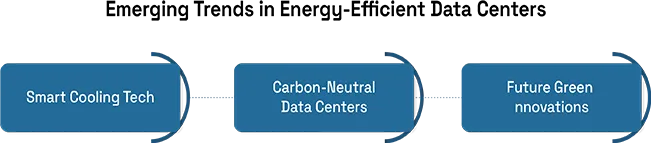
To tackle energy inefficiency, operators are adopting several cutting-edge strategies. One major trend is the use of renewable energy, such as solar and wind, to power colocation cloud, data center environments. Companies like Google and Microsoft are also turning to AI-driven management systems that continuously improve performance. These technologies work in tandem with data center automation software, helping reduce unnecessary energy consumption and balance loads more effectively across servers.
Additionally, innovative cooling techniques are now commonplace in newly designed facilities. Some operators are building cloud data centers in cooler climates to naturally reduce their cooling needs, while others are implementing liquid immersion systems that offer better efficiency than traditional fans. Changes of data center optimization techniques include the use of contained and modular infrastructure, which allows fast signalization with more controlled energy production. Combined, these changes support a wide push for energy-smart data centers, which are both highly performing and environmentally responsible.
Solutions and the Road Ahead
Data center services will depend much more on future sustainability. One of the most promising developments is the strategic placement of features at renewable energy sources. This not only minimizes emissions but also minimizes the cost of energy in the long term. Additionally, organizations are moving towards data center construction models that prefer airflow efficiency, green materials, and data center automation tools to keep operations lean.
Governments too are stepping in with environmental incentives, green certifications, and stricter regulations to make sure that new data centre projects align with climate goals. In this evolving landscape, operators must use data center solutions that go beyond just uptime and performance. Energy reporting dashboards, AI optimization, and circular economy strategies, such as reusing waste heat or recycling hardware, will define the next generation of sustainable data centers. Whether you’re a business leader or just learning what data centers are, it’s clear that efficiency, automation, and green energy are key pillars of the road ahead.
Did you know?
Microsoft’s AI data center spending included a $10 billion investment in sustainable cloud infrastructure by 2024.
FAQs
Q1. What is a data center?
A data center is a feature that stores and processes data for businesses and online services. It has houses server, storage, and network systems that execute apps, websites, & cloud services.
Q2. Why do data centers use so much energy?
Data centers operate 24/7 and power thousands of servers that generate too much heat. To safely run them, they require cooling systems – both computing and cooling use too much electricity.
Q3. How does AI help reduce data center energy usage?
AI tools can monitor server workloads and temperature in real time. They adjust cooling systems and shift workloads to avoid overuse, making the whole system more energy-efficient.
Q4. What are energy-efficient trends in data centers?
These include renewable energy, liquid cooling systems, AI-based optimization, modular setup, & energy-saving data center automation software tools.
Q5. How are companies making data centers more eco-friendly?
Many organizations use solar or wind resources, establish factories in cooler locations, apply heat-transport techniques, and use advanced programs to limit waste, so their cloud data centers become more sustainable.
