Due to the fast advancement in technology and its influence in the field, it is highly expected that one needs to bookmark seamless digital experiences now rather than before. Today, the cloud has become necessary for business organizations, and so has arisen the need to have efficient and intelligent data centers. Cloud computing data centers have thus become the new generation of data centers; therefore, the choice of reliability and scalability has more to do with business decisions than with technical decisions.
While the first one is the ability of a data center to continue to operate even in the event of catastrophes like an earthquake, flood, or a virus attack, the second one means the ability of a data center to handle the increasing amount of traffic. These two characteristics are important to ensure constant, productive, and safe online services.
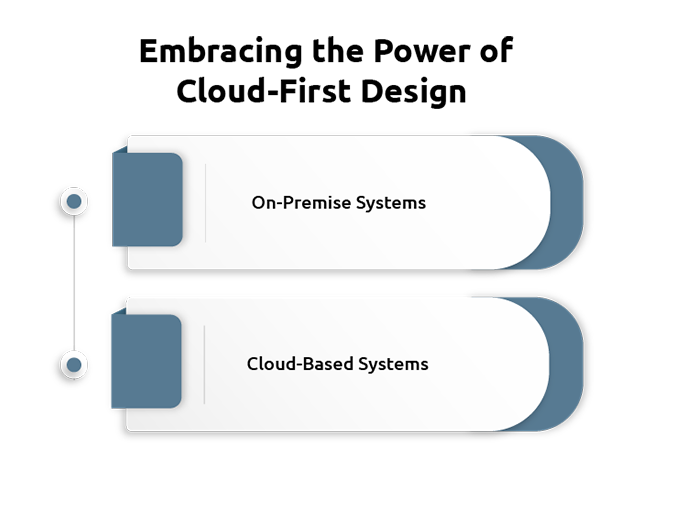
Embracing the Power of Cloud-First Design
Organizations have left conventional on-premise systems and embraced the new technology state, cloud-based data centers, not only streamlining the execution of operations but also creating a perfect opportunity to adapt to the changes in the market. Virtual data centers today are now flexible software resources based on clouds, which can be provisioned or deprovisioned depending on the necessary usage at that time.
Living at the center of this change is data centre virtualisation in cloud computing, where many virtual machines can operate on one physical machine. This way, the optimal result is achieved in terms of resource use, cost, and energy needed. It is no longer a case of having a large physical server being difficult; it is a question of how well matched one’s infrastructure is.
Building for Resilience: Lessons from Real-World Disruptions
The past few years have seen several high-profile outages—Microsoft outages, the AWS outage, Frontier internet outage, and issues with Google Fiber—underscoring the importance of building resilient systems. Whether it was a configuration error or a third-party software malfunction like the Microsoft outages caused by CrowdStrike, these events remind us that resiliency planning is not optional.
Advanced monitoring tools, disaster recovery protocols, geographically distributed architectures, and automation powered by AI (like Grok AI) can prevent such outages or drastically reduce downtime. These measures are now a core part of modern data center architecture in cloud computing.
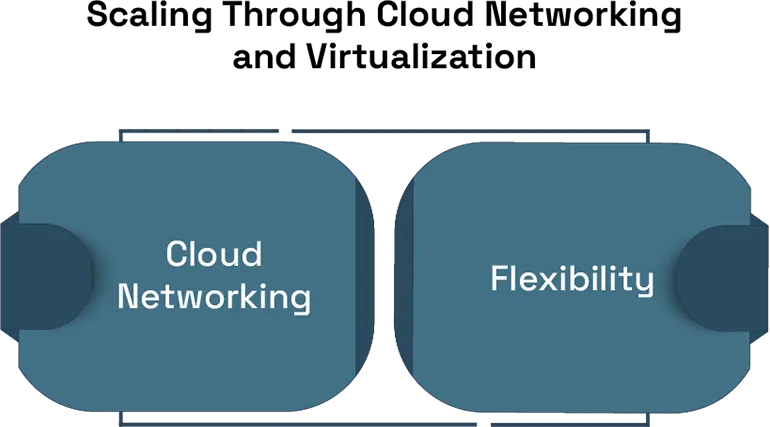
Scaling Through Cloud Networking and Virtualization
As user demand grows, so must the data center. This is where cloud networking and understanding cloud-based data center networks become important. Scalable systems leverage both public cloud data centers and hybrid infrastructures, ensuring that performance scales with user expectations.
Through virtualization of data centers in cloud computing, businesses can deploy applications faster, allocate resources more efficiently, and scale operations without the delays of provisioning new physical hardware.
One of the key benefits of the cloud data center in cloud computing is its inherent flexibility. A company experiencing a sudden traffic surge, such as during a product launch or holiday sale, can instantly tap into additional virtual resources and return to normal once the demand eases.
Design Matters: The Role of Data Center Architecture
The design and layout of data centers in cloud computing have changed significantly over the years. Today, data center architecture in cloud computing focuses on modularity, high availability, and energy efficiency.
Architectures are being developed with disaster recovery zones, automated backup systems, and real-time traffic routing. Advanced platforms use AI, like Grok AI, to monitor performance metrics and predict potential points of failure before they occur.
This part of evolution can be associated with the data center trends called self-healing, zero-trust security, and smart power.
Sustainability: A Growing Priority
With climate change being a subject of concern in the current world, green data center construction and management trends are emerging to rule the new structures. Sustainability strategies like liquid cooling, renewable energy sources, and no-carbon-emission data center operations are becoming common across the data center industry.
Major tech players are pledging carbon neutrality. According to a 2024 report by the U.S. Department of Energy, data centers account for roughly 2% of total electricity use in the country, making sustainability not just a trend but a necessity.
Sustainable design in cloud computing centers doesn’t mean sacrificing performance. On the contrary, innovations in virtualized data centers in cloud computing PPT presentations highlight how these green approaches can improve long-term efficiency and operational costs.
Final Thoughts
The digital era calls for infrastructure that doesn’t just keep up but leads the way. The shift to cloud computing data center models is redefining how we think about uptime, agility, and sustainability. Utilizing the latest trends such as virtualization, network architecture, and artificial intelligence, the data centers can be established in cloud computing environments that would be capable of meeting the current and future challenges.
If we are heading further into this new age of cloud, it will be those who have the capabilities to grow and remain reliable that will emerge as the victors. Data Center Strategy: Such is the case with data centre as it is the foundation of a company’s digital future, irrespective of whether it’s a tech giant or fast-scaling start-up.